University of Cape Town, Development Policy Research Unit (DPRU)
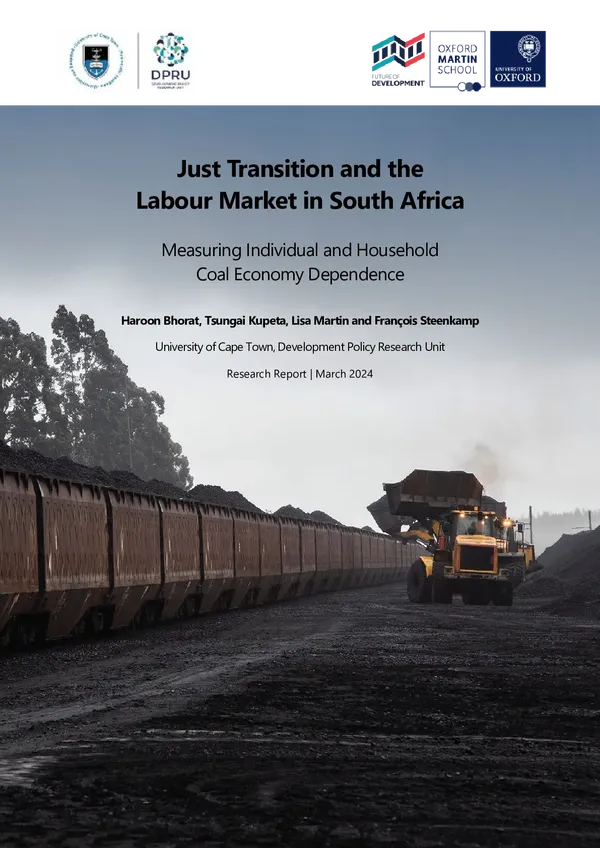
This research report examines the socio-economic impacts of transitioning from coal to sustainable energy in South Africa. In particular, the report provides a quantitative estimate of direct and indirect jobs associated with the coal sector in South Africa and explores the labour market profile and characteristics of the individuals and households linked to the coal sector. The study uses industry and spatial dimensions to determine the scope of analysis. As existing publicly available data does not allow for the reliable measurement of employment across the entire coal value chain, the study focuses on measurable elements of the value chain using data from various sources. The study underscores the necessity of balancing environmental goals with economic and social considerations to ensure a fair transition for all stakeholders involved.
Key Findings/Recommendations:
The report finds that a key challenge in the just transition debate is the matching problem, where the match rate – the rate at which those who lose their jobs in the coal industry are matched to other employment opportunities – is low. Therefore, policies need to be developed and implemented to improve the match rate for coal sector workers transitioning to other employment opportunities. Furthermore, there should be a focus on preserving the skills of semi-skilled workers by facilitating their transition to alternative industries through targeted training and employment, emphasising the need for training programs that align with the skills required in emerging industries. The report also finds that the direct economic footprint of the coal mining industry’s is relatively small, contributing approximately 1% of national GVA. However, while the coal mining industry may account for a relatively small share of national GVA, the industry’s footprint is felt more acutely in its many linkages with the broader coal value chain that encompasses the power generation and the downstream chemicals industries. In addition, the industry is an important source of export revenue.
Read online:https://www.oxfordmartin.ox.ac...
More Socio-environmental impact assessment research
Stakeholder Report: Role of Coal Methane Abatement in SA's Climate Compatible Development Pathway