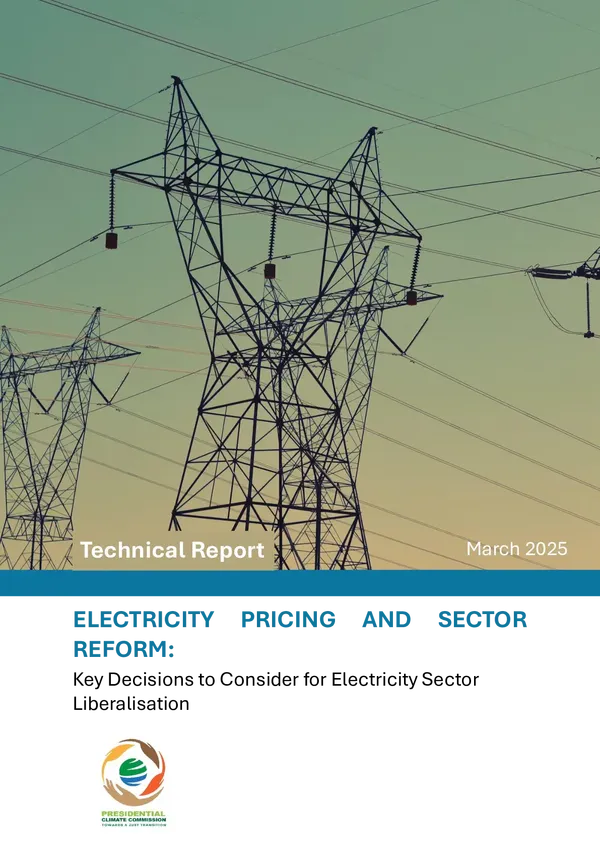
Electricity Pricing and Sector Reform: Key Decisions to Consider for Electricity Sector Liberalisation
Overview
This technical report, prepared for the Presidential Climate Commission by the Regulatory Assistance Project, outlines key decisions for South Africa's transition to a liberalized electricity market. It addresses challenges like grid constraints and investment shortages, building on lessons from countries like India and Brazil. The report emphasizes the need for a formalized structure to promote competition, improve efficiency, and ensure consumer protection. It highlights critical considerations for planners and regulators, including adapting power sector planning and leveraging market mechanisms, stressing that a one-size-fits-all approach is ineffective, requiring a customized strategy for South Africa.
Recommendations
South Africa's electricity sector reform requires strategic decisions to transition to a liberalized market. Key takeaways include carefully phasing in competition to reduce costs while ensuring consumer benefits. Responsibilities for planning and investment should shift to neutral entities to prevent conflicts of interest. Crucial decisions involve establishing wholesale market rules, integrating renewable energy, and leveraging market mechanisms for risk management. Learning from international experiences, particularly regarding municipal debt, is vital. Ultimately, a customized approach, not a one-size-fits-all model, is essential for South Africa to achieve an efficient and reliable power system.
Publisher: Presidential Climate Commission
Download the document or click here to read more.
More Energy / Electricity research