A Just Transition to a Low Carbon Future in South Africa
Institution / Author:
Mapungubwe Institute for Strategic Reflection (MISTRA)
Year:
2022
Sectoral focus:
Economy-wide
Type of analysis:
Policy Recommendations
Type of document:
Book
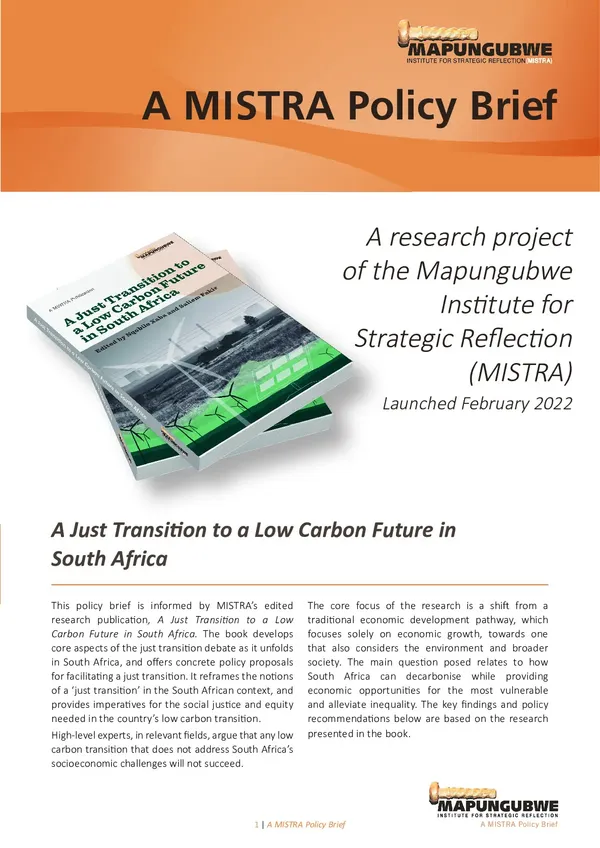
This book underlines the fact that the low carbon transition in South Africa has to grapple with complex historical, social, economic, cultural and political factors. The main message is that the transition to a low-carbon society is possible, but it can only succeed if it is just and handled collaboratively. In addition, the book aims to broaden the discourse on low carbon transition and explore the opportunities in and impediments to making the transition fair, affordable and socio-economically viable.
Key Findings/Recommendations
The book highlights nine key findings which are:
- A just transition in South Africa requires polices and strategies that are people-centred
- South Africa’s emerging energy system, which has increased renewable-energy capacity, requires structural reform of the energy services sector
- Policies and strategies relating to industrial development; employment; skills development; energy distribution and security, and just transition finance need to be aligned with the principles of a just transition
- South Africa needs to industrialise to achieve meaningful economic growth
- The skills and training required for a low carbon economy need a fresh approach from all stakeholders involved, with the recognition that the energy sector will not be able to make up for anticipated job losses.
- Technological innovations must be used to address energy equity, as well as the current demand for energy
- South Africa must reap benefits from the advances of modern technology, science, and industrial development
- Social justice and climate are intersectional issues
- Just transition finance must ensure adequate, predictable and accessible funding for the most vulnerable and other affected stakeholders
Read online: Click Here
More Economy-wide research



DOCUMENT
Capacity Building Programme Strengthens South Africa’s Path to a Climate-Friendly Future
2026
International Climate Initiative