Experts convene to address water and soil contamination in Mpumalanga
- JustSA
JUST SA (Just Transition to a Decarbonised Economy for South Africa programme) and the World Wide Fund for Nature (WWF) South Africa hosted an inception meeting for its Water and Soil Contamination Technical Advisory Group (TAG).
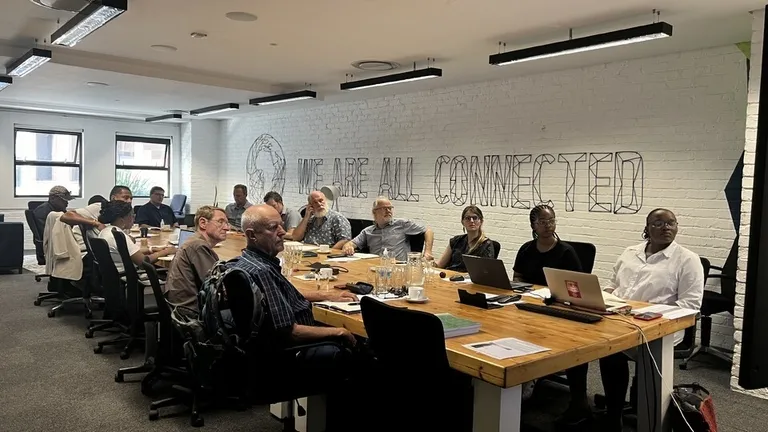
JUST SA and the World Wide Fund for Nature (WWF) South Africa hosted an inception meeting for its Water and Soil Contamination Technical Advisory Group (TAG). The inaugural meeting took place at the beginning of February at the WWF’s two offices, in Johannesburg and Cape Town, with the two venues linking virtually, as well as other experts joining virtually, some from as far as Norway and Switzerland.
The project is part of the JUST SA programme, funded by the German government's International Climate Initiative. Its overarching goal is to pave the way for a low-carbon, climate-resilient and equitable economy through targeted interventions. Addressing water and soil contamination and its subsequent rehabilitation in Mpumalanga is crucial, and the formation of the TAG signifies a significant step forward. The group serves as a platform for experts from diverse fields, to collaborate and provide insights into combating water and soil contamination in this province.
Beyond the TAG: A broader vision for sustainable rehabilitation
While the TAG plays a vital role, it is crucial to understand its contribution within a broader context. This project forms part of Output 4 of the JUST SA programme, which aims to develop viable solutions and business cases for land and mine rehabilitation in Mpumalanga. This broader vision goes beyond simply addressing contamination; it seeks to create a sustainable future for the region.
WWF SA, as the facilitator and coordinator of Output 4, is actively engaged in several initiatives. These initiatives include:
- Convening stakeholder groups: beyond the TAG, JUST SA, through WWF, establishes various groups such as stakeholder reference groups and working groups to foster collaboration and knowledge sharing among diverse stakeholders, ensuring a comprehensive and inclusive approach
- Developing business cases: by working with these stakeholders, JUST SA, through WWF, aims to create economically attractive propositions for land and mine rehabilitation. This aligns with the TAG's role in providing expert insights and validating proposed solutions, ultimately demonstrating the potential for job creation and economic diversification in a sustainable manner
- Knowledge sharing and capacity building: through workshops, publications and other resources, JUST SA, through WWF, helps stakeholders understand and implement best practices in rehabilitation. The TAG's knowledge exchange activities directly contribute to this effort, ensuring widespread dissemination of expertise and best practices
- Advocacy and policy engagement: the TAG aims to inform and shape solutions, ensuring a supportive policy environment for long-term sustainability
The inaugural meeting and future steps
The meeting agenda featured presentations on the JUST SA programme, as well as the work that JUST SA and WWF will aim to conduct on mine water and land rehabilitation over the coming years.
Through a literature review, participants delved into existing knowledge gaps and contested views, laying the groundwork for informed decision-making.
The meeting concluded with plans for future steps and a networking lunch, fostering ongoing collaboration and engagement among participants.
The formation of the group marks a significant step towards addressing environmental challenges in Mpumalanga. The group will continue to meet every quarter.